

Journal
How to layer a heated vest
A heated vest is a middle layer that happens to make its own heat. Put it in the right place in your clothing and a Low setting can carry you through a cold morning.
Published October 1, 2026
CDC NIOSH, the federal office that studies working in the cold, gives one piece of advice that a heated vest fits into neatly: wear several layers of loose clothing, because layers insulate better than one thick garment. It also asks you to cover your ears, face, hands and feet and to wear a hat. A vest does none of those last jobs, and that is why it belongs inside a system rather than on its own.
Three layers, and where the vest goes
Think of your clothing in three layers. Next to the skin goes a base layer that moves sweat away. In the middle goes insulation. On the outside goes a shell that stops wind and rain. A heated vest is the middle layer with a power switch: its panels warm the air trapped between the base layer and the shell, and that warmth stays put as long as the shell keeps the wind out.
| Layer | What it does | What to wear |
|---|---|---|
| Base | Moves sweat off your skin | A thin long-sleeve top, wool or synthetic |
| Middle | Holds and adds heat | A Soleilwear heated vest, fleece or puffer |
| Outer | Stops wind, rain and snow | A shell or a winter coat, on wet or windy days |
Two things follow from that picture. First, the vest works best over something thin, not over a heavy hoodie: the panels have less fabric to push heat through. Second, on a still, dry day the vest itself can be the outer layer, as long as its fabric blocks the wind. That is where our two vests part ways.
The puffer: your outer layer on a dry day
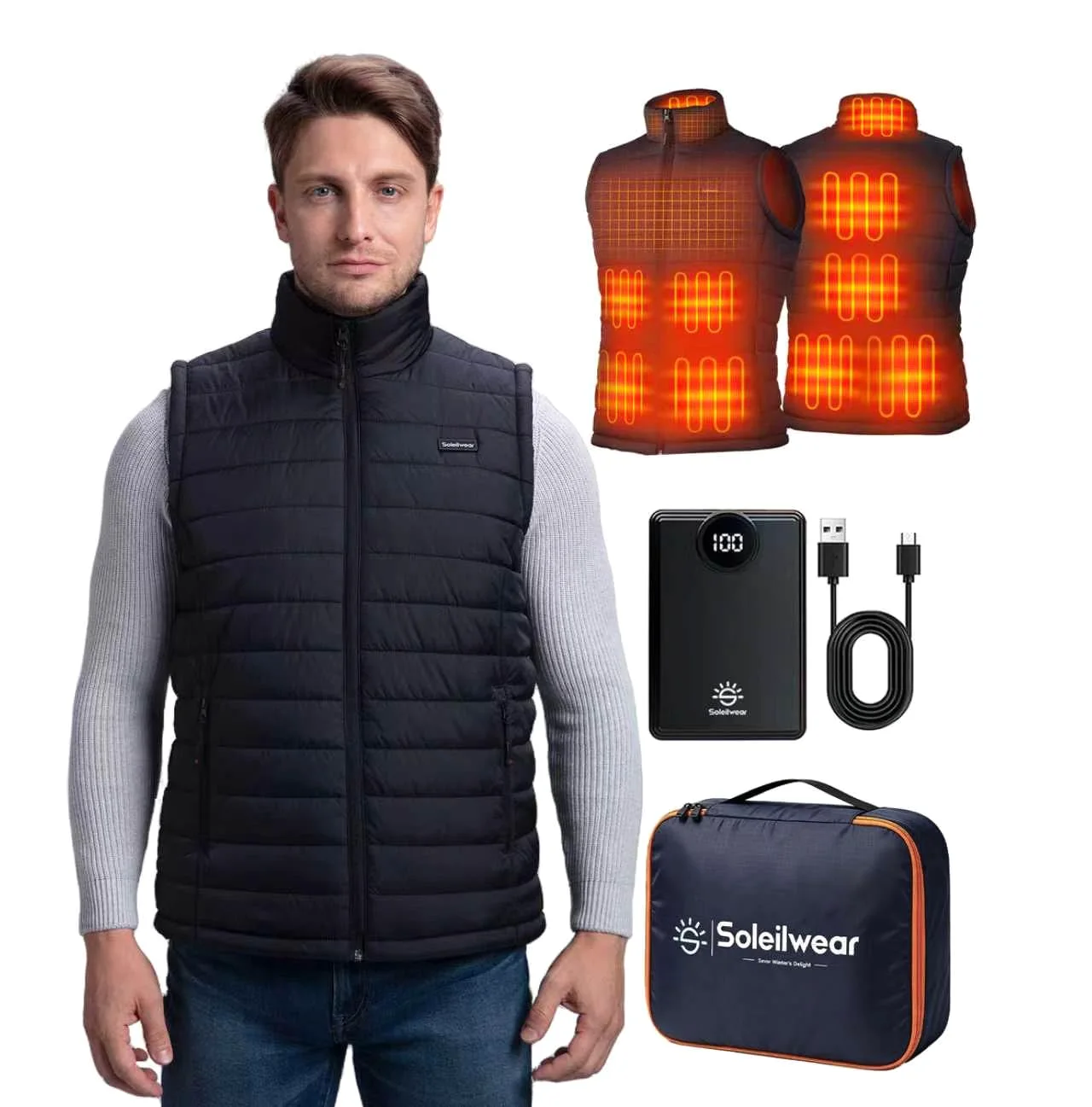
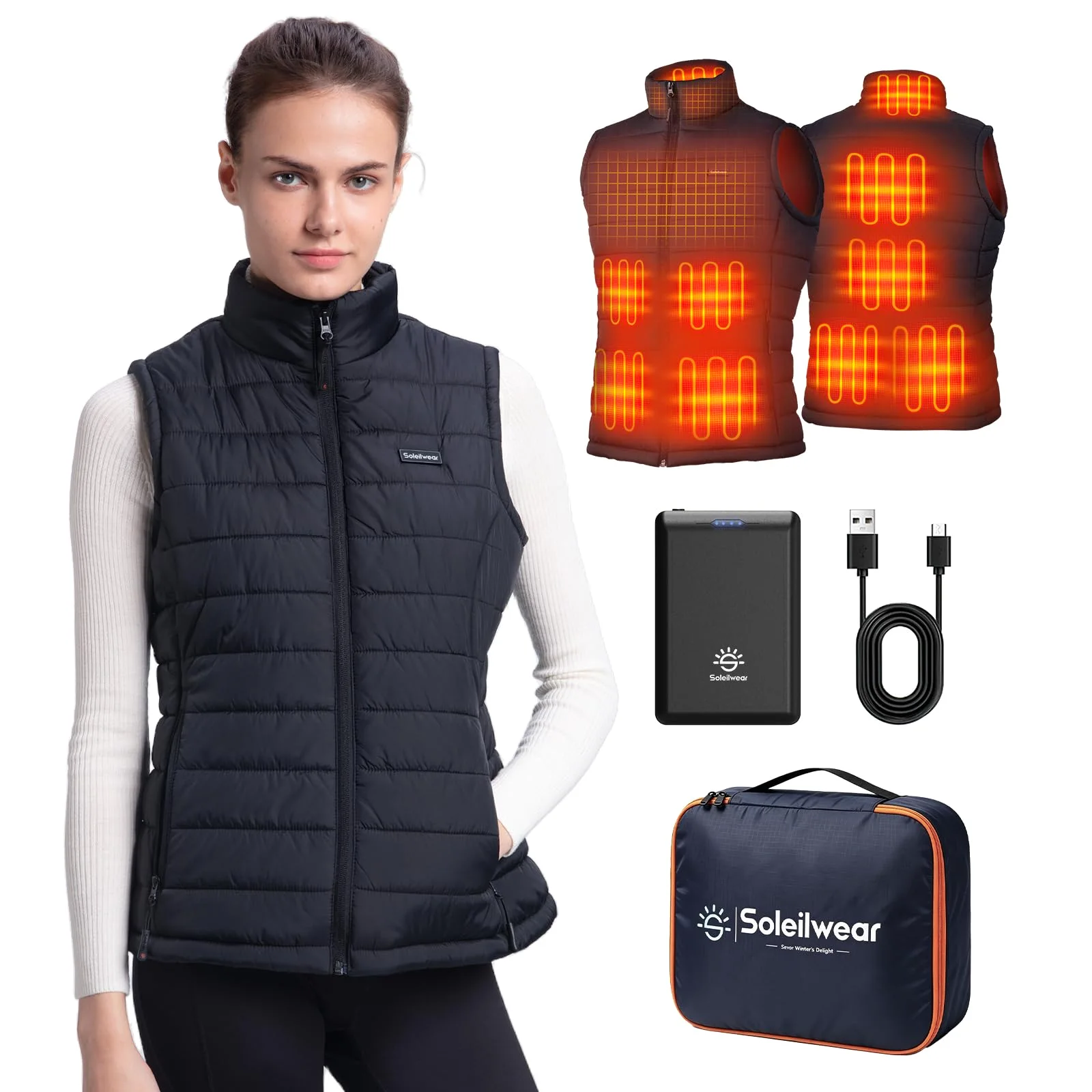
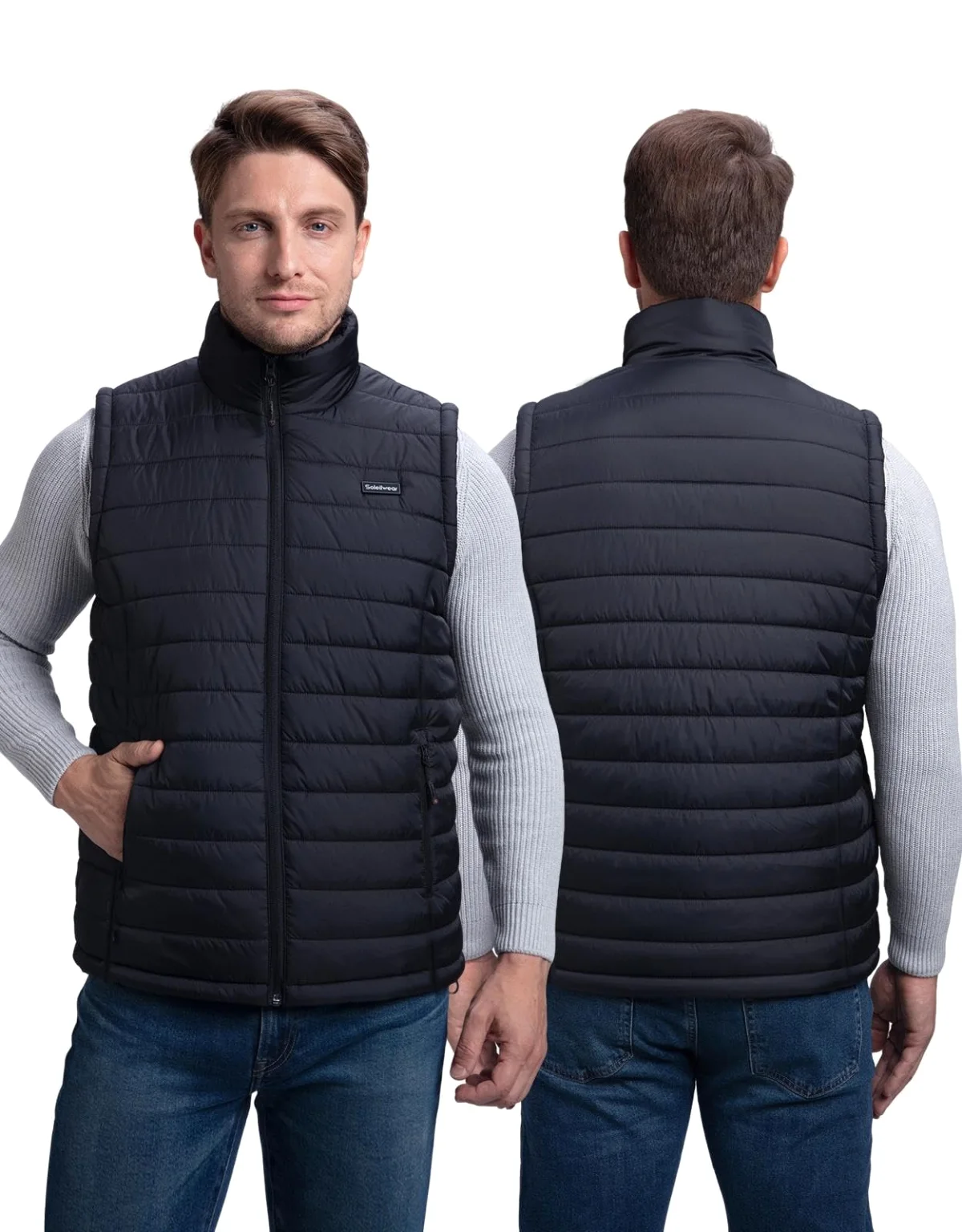
Our lightweight vest has a quilted nylon-polyester shell, and both the shell and the lining are treated to repel water. It blocks wind and sheds light rain, so on a dry, cold morning you can wear it over a long-sleeve top and nothing else. In real rain it becomes the middle layer again: a shell goes over it, because water-resistant is not waterproof.
The fleece: the one that goes under a coat
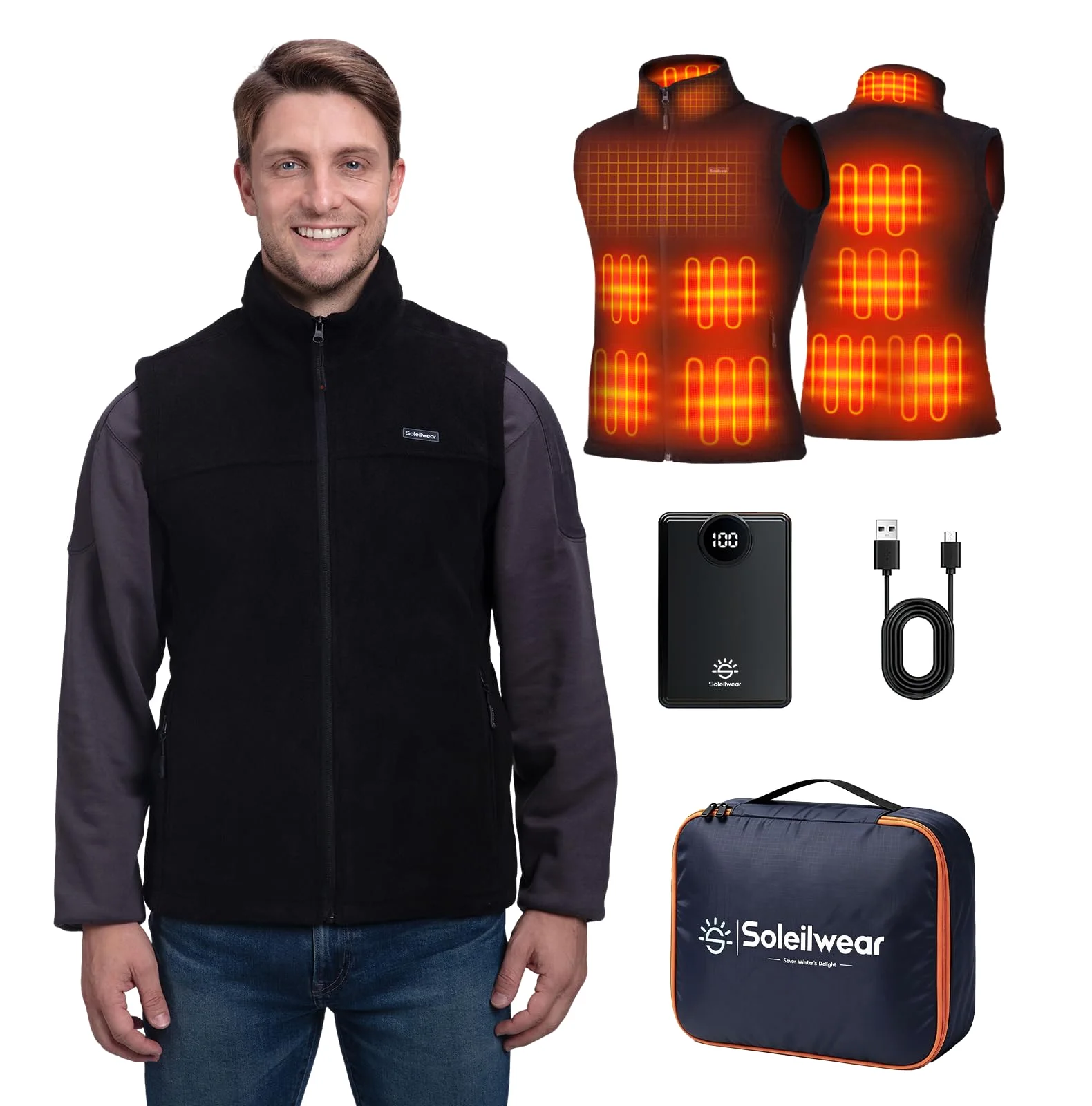
The fleece vest is soft and quiet, and it has a stand-up collar around the neck panel. It is cut slim enough to go under a parka, a work jacket or a rain shell without bunching, which makes it the better choice when you already own a coat you like and only want it to be warmer. Nine panels sit at the neck, the chest, the middle and lower back, and around the zippered pockets.
Sizing for layers
Because a vest sits in the middle, its size depends on what you wear under it. Our puffer charts give two numbers for each size: the body it fits and what the vest itself measures. A men's M is made for a 38 to 40 inch chest and measures 46.5 inches around, which leaves room for a base layer and a thin sweater. If you live in thick hoodies, compare the garment chest with your chest plus the hoodie, and read the size guide before you choose.
| Size (men's puffer) | Body chest | Vest chest |
|---|---|---|
| M | 38 to 40 in | 46.5 in |
| L | 41 to 44 in | 50.4 in |
| XL | 45 to 48 in | 53.9 in |
Settings and layers
Each vest has three settings on the chest button: Low at 104°F, Medium at 122°F and High at 140°F. Under a shell that stops the wind, start on Low and move up if you need to. Every step up draws the bank down faster, so a well-layered outfit is also the one that lasts longest on a charge.
Leave a little room under the outer layer. The same NIOSH page warns that some clothing restricts movement, and a vest squeezed under a coat that was already tight will do the same. That is one more reason the size charts give the garment chest, not only the body.
Every vest in the Soleilwear range comes with its own 10,000 mAh bank in an inner pocket. If you want to know how many hours that buys you, our article on how long a heated vest battery lasts works through the numbers.
