

Journal
How long does a heated vest battery last?
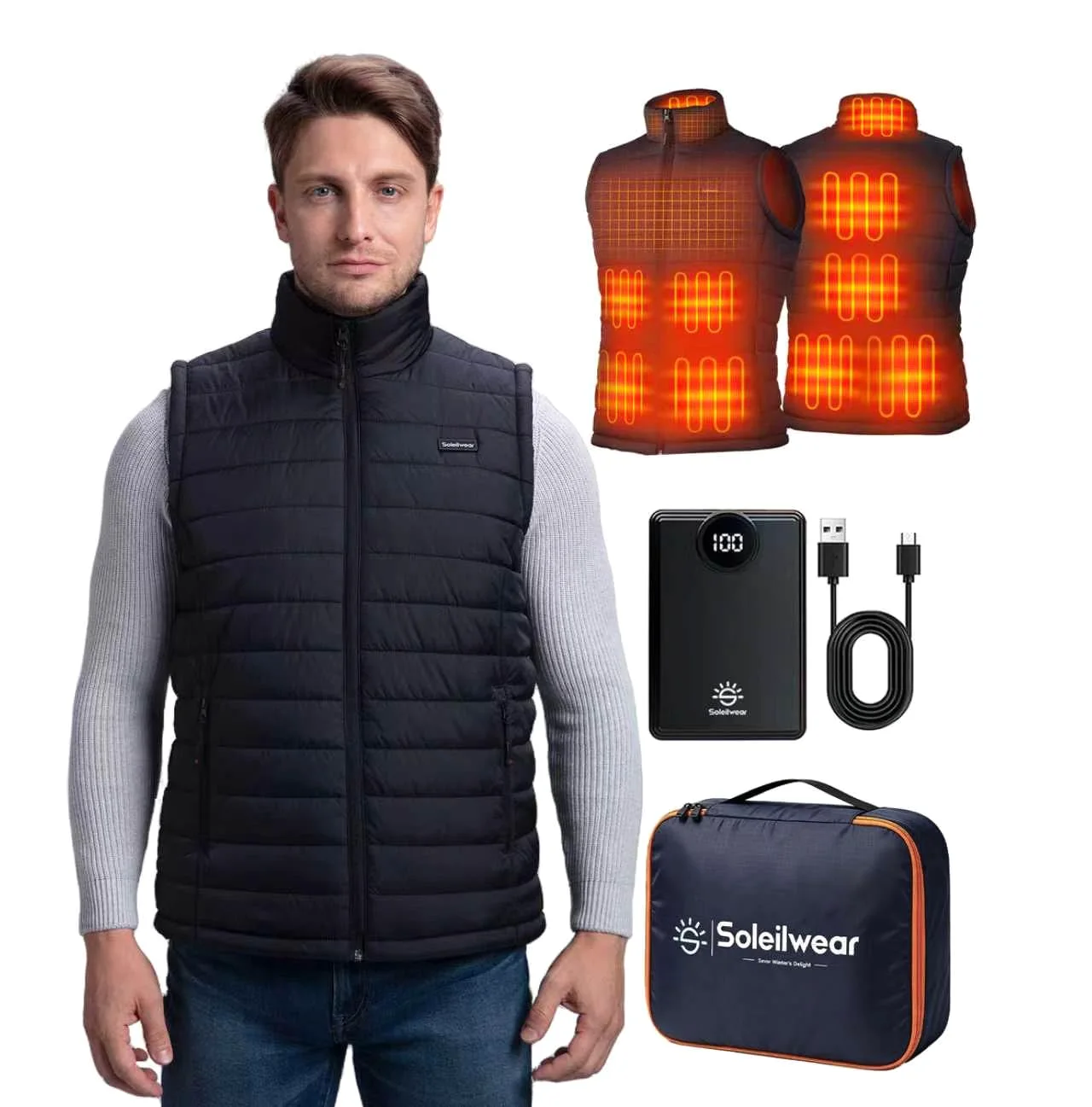
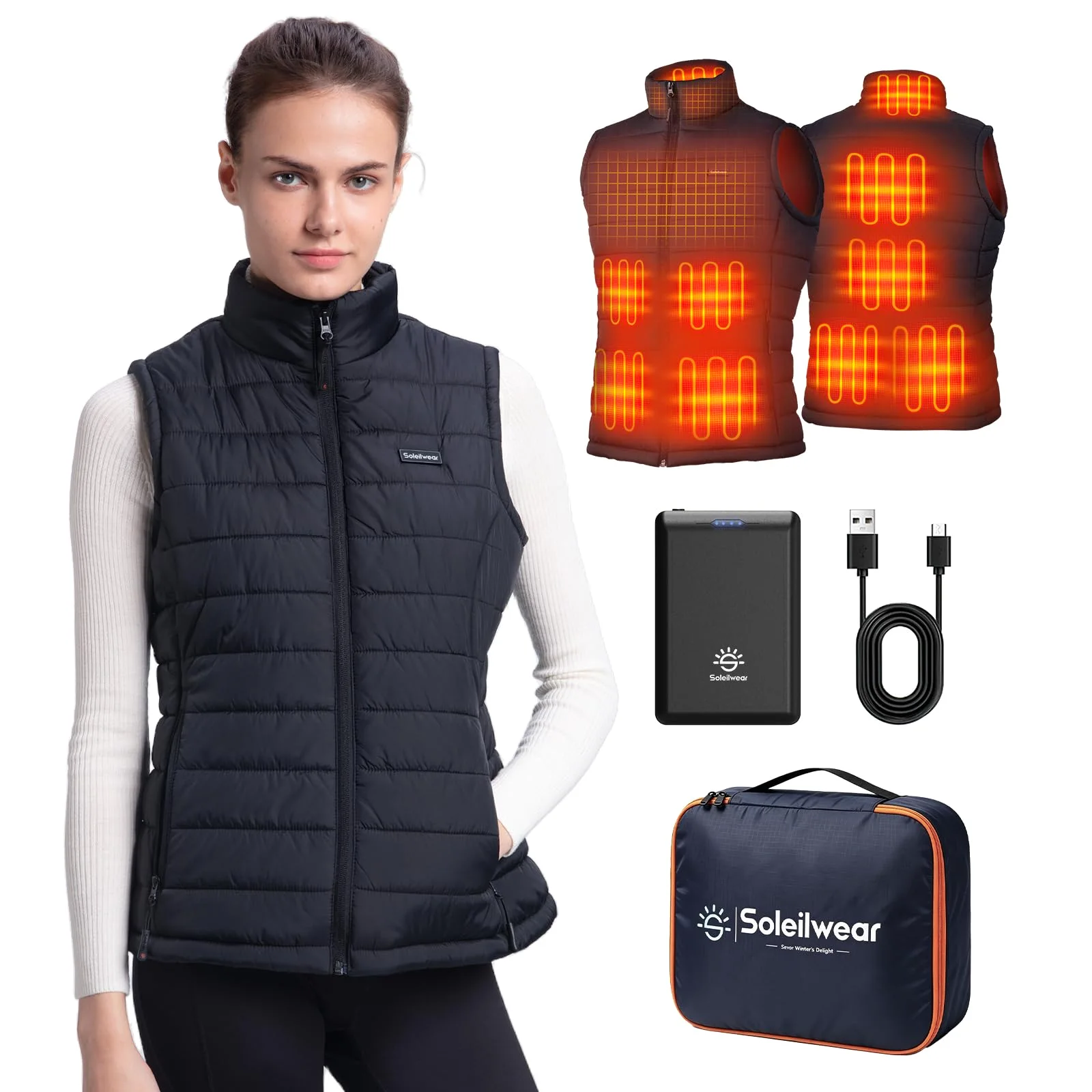
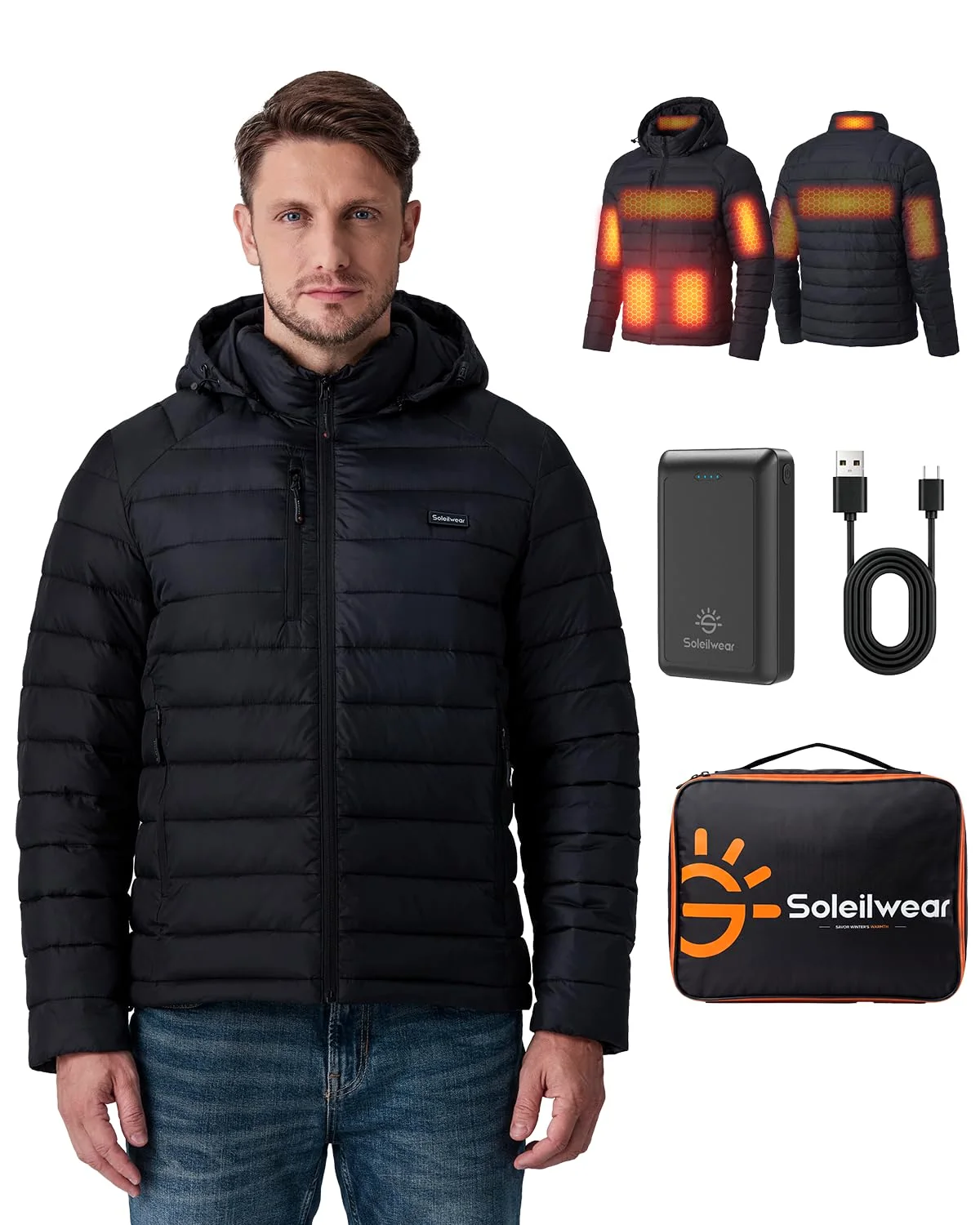
It depends on the setting, the bank and the garment: up to 10 hours on a puffer vest, 6 to 12 on the jacket, and a second bank to carry you past that.
Published October 1, 2026
A heated garment spends its battery on one thing: keeping the panels at the temperature you chose. Hold the chest button for three seconds and the heat comes on. Press it again to step between Low at 104°F, Medium at 122°F and High at 140°F. The higher the setting, the more current the panels draw, and the sooner the bank runs down.
The figures, garment by garment
Not every garment has a runtime rating. The fleece vests carry the same 10,000 mAh bank as the puffers, but we do not rate them for hours, so on a long day in fleece, plan around a spare bank.
| Garment | Bank in the box | Low | Medium | High |
|---|---|---|---|---|
| Lightweight puffer vest | 10,000 mAh, 5V | up to 10 h overall | shorter | shortest |
| Fleece vest | 10,000 mAh, 5V | not published | not published | not published |
| Graphene jacket (men's) | 16,000 mAh, 7.4V | 12 h | 8 h | 6 h |
| Graphene jacket (women's) | 16,000 mAh, 7.4V | up to 12 h overall | shorter | shortest |
The men's jacket is the one garment where we give a figure for each setting, and it shows the shape of the curve: halve the hours, roughly, as you go from Low to High. That is a useful rule of thumb for planning, as long as you remember it is a rule of thumb and not a measurement of your vest on your day.
What changes the hours on a real day
- The setting. High is for the first cold minutes, and Low is where most of a long day can sit.
- The layer over the vest. A shell that stops the wind keeps the warmed air in, so a lower setting feels like enough.
- A phone on the second USB port. The bank in the box has two ports, and charging a phone from it shares the same capacity.
- The bank's own charge. A bank left half-charged since last winter starts the day half-empty.
When a spare bank pays off
If your day outside is longer than one bank, the simplest answer is a second bank: wear one while the other charges. Our 12,000 mAh spare is a 5V bank made for our vests, slightly larger than the 10,000 mAh bank that comes with each vest, with two USB outputs at 5V 2.4A and a USB-C input. The fleece vest is also sold as a set with that spare in the box.
The spare does not run the jacket. The jacket uses a 7.4V pack, and a 5V vest bank does not replace it.
Charging and storing the bank
The Seattle Fire Department gives advice for every lithium-ion battery that applies here: charge with the cable that came with the device, not on a bed or a sofa, and stop charging once the battery is full. Keep banks out of direct sun and hot cars, stop using one that swells, leaks, smells or gets too hot, and never throw a battery in the trash.
Between seasons, store the vest clean and dry and the bank on its own. Then give the bank a full charge the night before the first cold morning. If you plan to fly with it, our article on flying with a heated vest power bank covers the carry-on rule, and the Soleilwear lineup lists every bank and garment we make.
