

Journal
Flying with a heated vest and its power bank
You can fly with a heated vest. The rule that matters is about the power bank, and it is short: the bank goes in your carry-on.
Published October 1, 2026
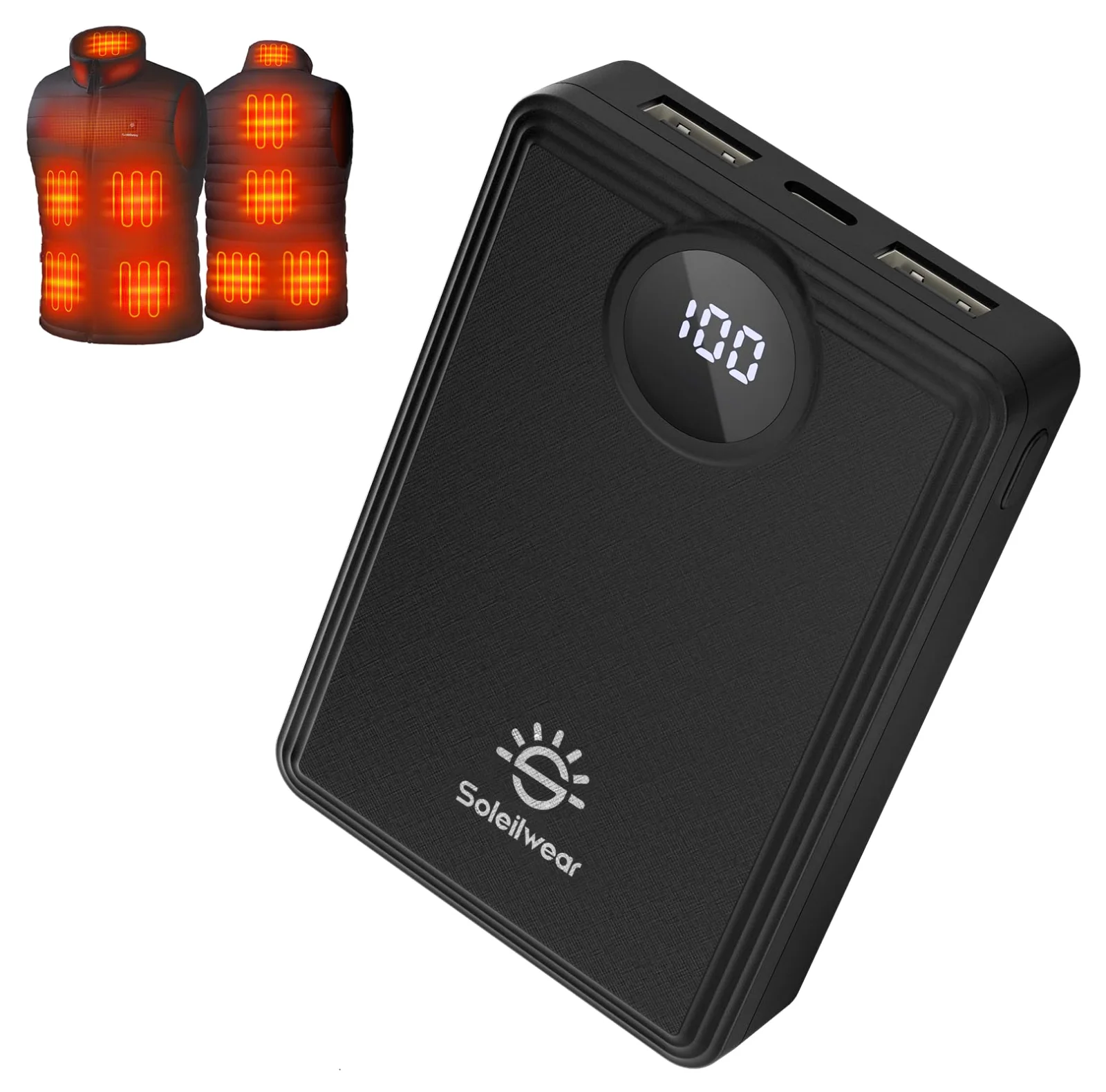
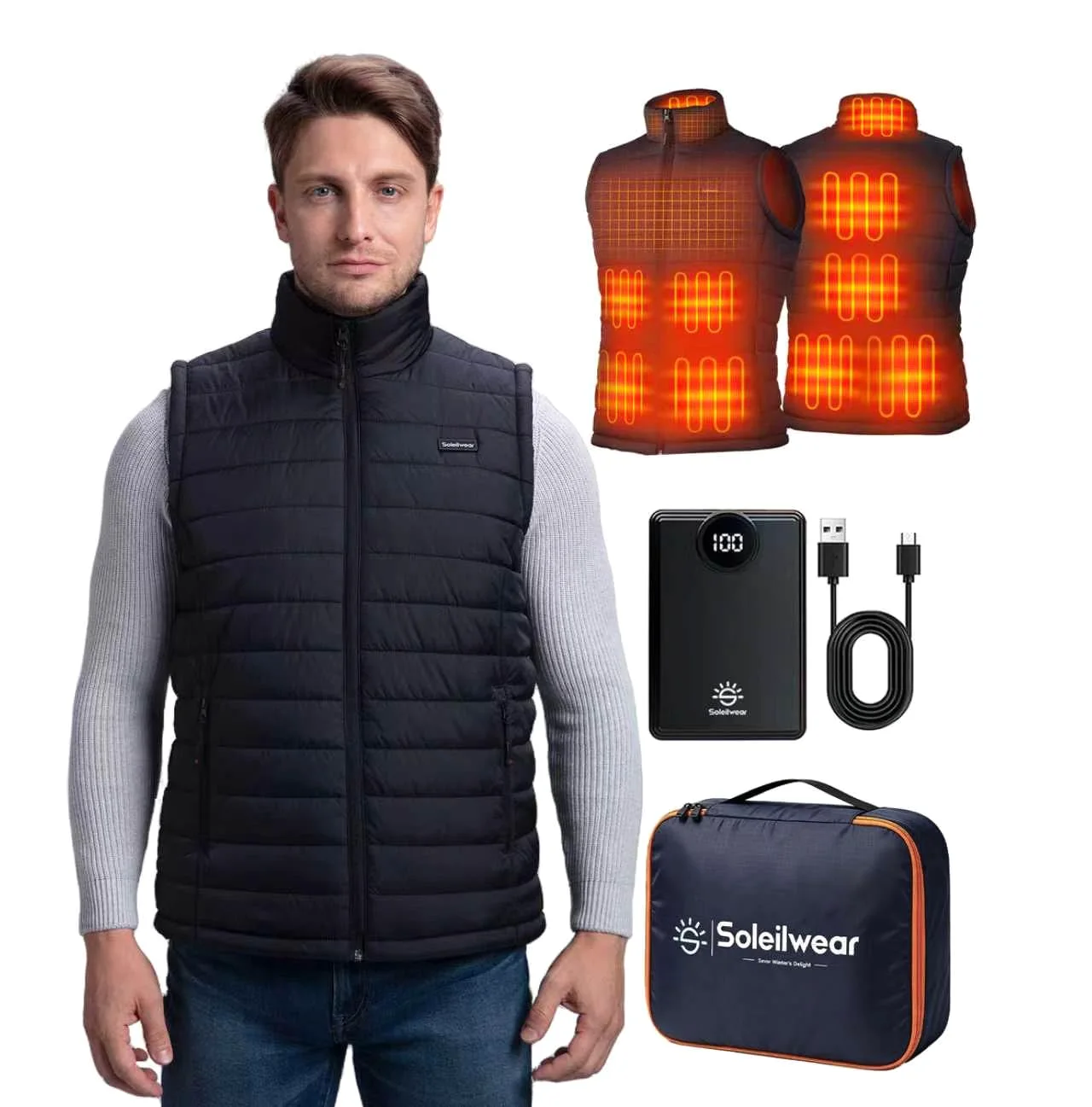
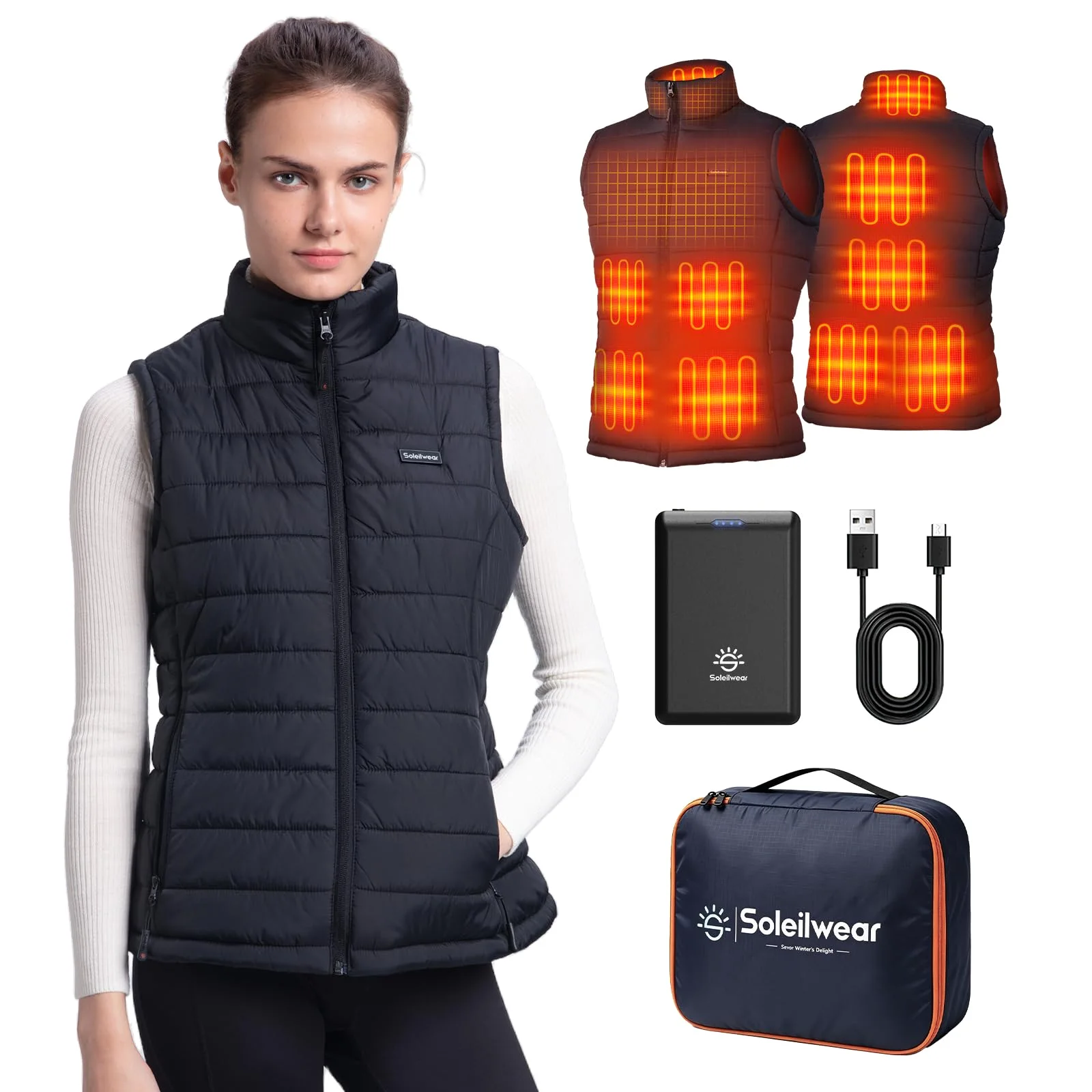
A heated vest is two things in one pocket: a garment with heating panels sewn in, and a lithium-ion power bank that runs them. Airlines treat them differently. The vest is clothing. The bank is a spare lithium battery, and spare lithium batteries have their own rule.
The bank goes in your carry-on
The TSA lists power banks as allowed in carry-on bags and not allowed in checked bags. The FAA says the same about every spare lithium battery, power banks included, and adds a detail people miss: if your cabin bag is taken from you at the gate and checked, take the bank out first and keep it with you.
So before you leave home, unplug the bank from the vest's cable and put it in the bag you keep with you. The vest itself, with the bank out, can go in either bag or on your back.
How to read the watt hours
The FAA limit is set in watt hours, not in milliamp hours. A rechargeable battery may be rated up to 100 Wh without the airline's approval. With approval, a passenger may carry up to two spares rated between 101 and 160 Wh.
Most banks print the watt hours on the label. If yours gives only milliamp hours and volts, the FAA gives the sum: watt hours are volts multiplied by amp hours. Divide the mAh figure by 1,000 to get amp hours, then multiply by the volts printed on the same label.
| Label says | Amp hours | Watt hours |
|---|---|---|
| 10,000 mAh at 3.7V | 10 Ah | 37 Wh |
| 12,000 mAh at 3.7V | 12 Ah | 44.4 Wh |
| 16,000 mAh at 3.7V | 16 Ah | 59.2 Wh |
| 16,000 mAh at 7.4V | 16 Ah | 118.4 Wh |
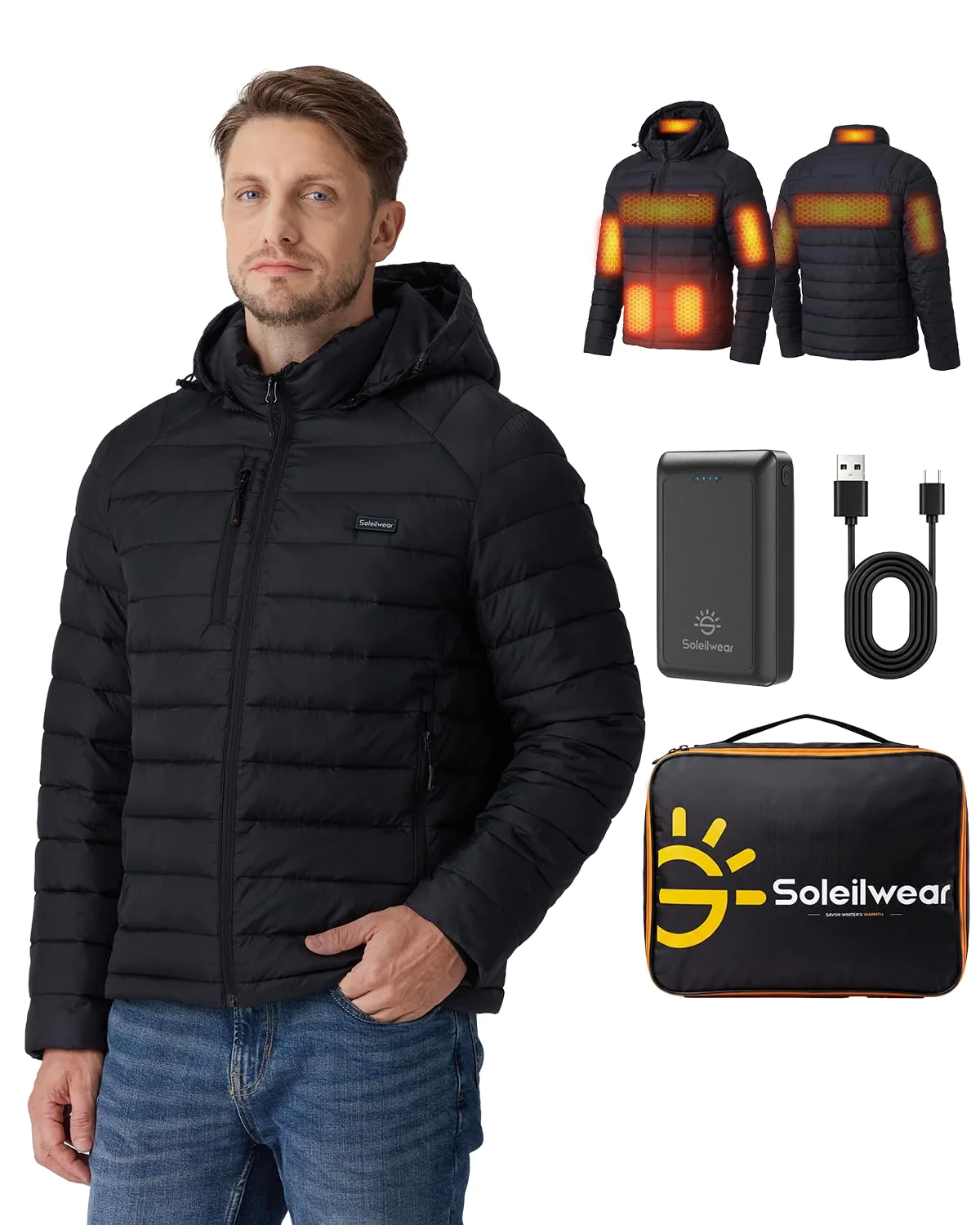
The volts that count are the ones printed beside the capacity on the label of your own bank. The last row shows why that matters: the same milliamp-hour figure at a higher voltage crosses the 100 Wh line. Our graphene jacket runs on a 7.4V 16,000 mAh pack, so read the label of that pack before you fly, and if it shows more than 100 Wh, ask your airline for approval in advance.
Protect the terminals
The FAA asks that a spare battery's terminals be protected from short circuit. A power bank with a closed case and recessed ports already does most of that job. Keep it away from loose coins and keys in your bag, and if your bank came in a pouch, use it.
A checklist for the airport
- Bank out of the vest and into your carry-on.
- Cable coiled and in the same bag as the bank.
- Watt hours read from the label, and worked out if only mAh and volts are printed.
- Over 100 Wh? Ask the airline before you travel.
- Cabin bag checked at the gate? Take the bank out first.
Rules can change and airlines may set tighter limits of their own, so the FAA and TSA pages linked below are worth a look before each trip. For how the vest and its bank work day to day, see our heating and battery guide. Every garment in the Soleilwear collection ships with its bank in the box.
